Casebook № 02 · Consumer brands, India · 2026 · 18 pages
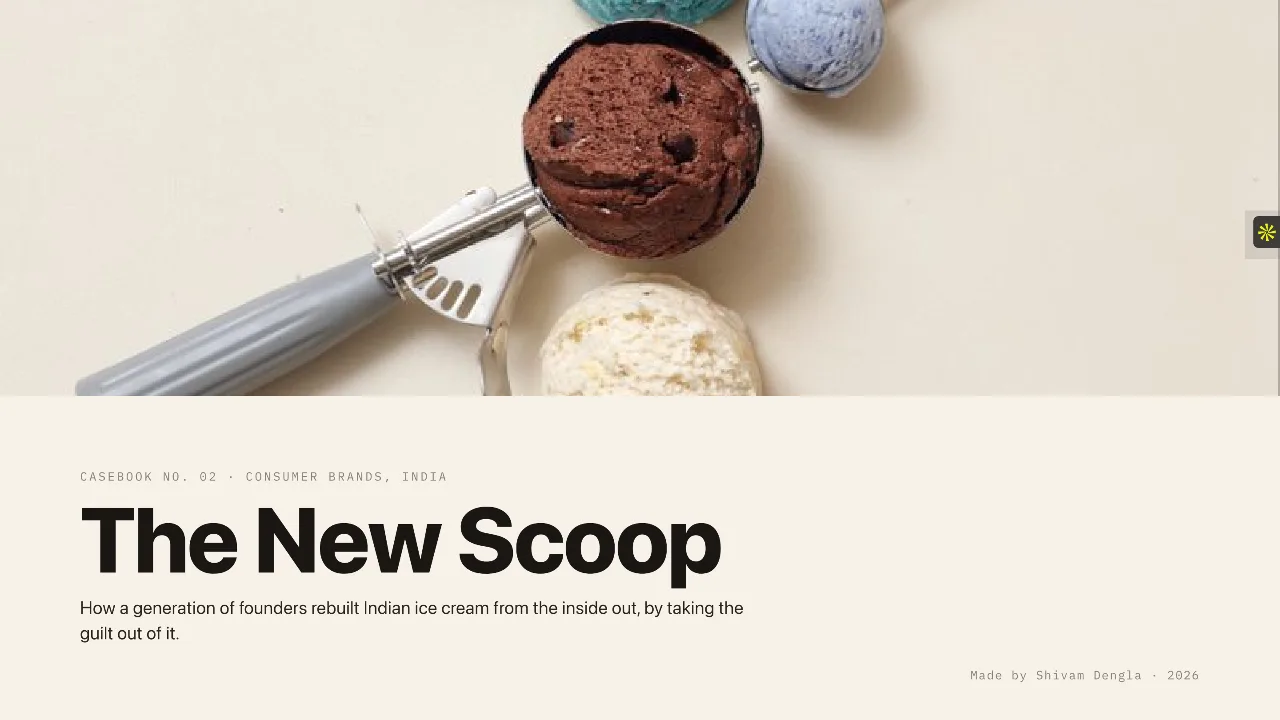
The New Scoop
How a generation of founders rebuilt Indian ice cream from the inside out, by taking the guilt out of it.
400 → 1,600 ml
India's per-capita ice cream consumption, 2011 to 2023. The United States eats 22,000 ml.
The thesis
The world's largest milk producer, with the longest hottest summers on earth and a 5,000-year dairy culture, ate less ice cream per person than almost anywhere. It was never about taste — it was about electricity. Solve the cold chain, and a 1.4-billion-person dessert market unlocks.
Inside the deck
- 01
What changed: three shifts at once
Power surplus by 2022 meant tier-2 kiranas could keep freezers on overnight for the first time. Quick commerce removed the home-freezer problem — ice cream became a 10-minute impulse. And 540 heatwave days in 2024 extended the season itself.
- 02
Every new brand is solving the same three seconds
You finish an ice cream and the guilt arrives with the pleasure. The new wave isn't built on “make ice cream better” but on “make ice cream not feel bad.” The brands that win don't sell less sugar — they sell permission.
- 03
Every price point is a different business
₹5–40 is a distribution war (Amul, Kwality Walls). ₹40–100 is brand and storytelling (Hocco, NIC). ₹100–150 is the guilt solve on quick commerce (Go Zero, NOTO). A ₹10 bar and a ₹300 gelato are different businesses, not one product at different prices.
- 04
The quick-commerce playbook, proven
Go Zero: don't build a plant, list on Blinkit before anyone else, wait three years for distribution before going on Shark Tank, and put 70–80 % of budget on search. ₹100 crore ARR with 70–80 % of it from quick commerce.
The cold chain was the entire bottleneck. Everything after it is brand.
Reading this and hiring for product? Email me — say what you disagreed with.